
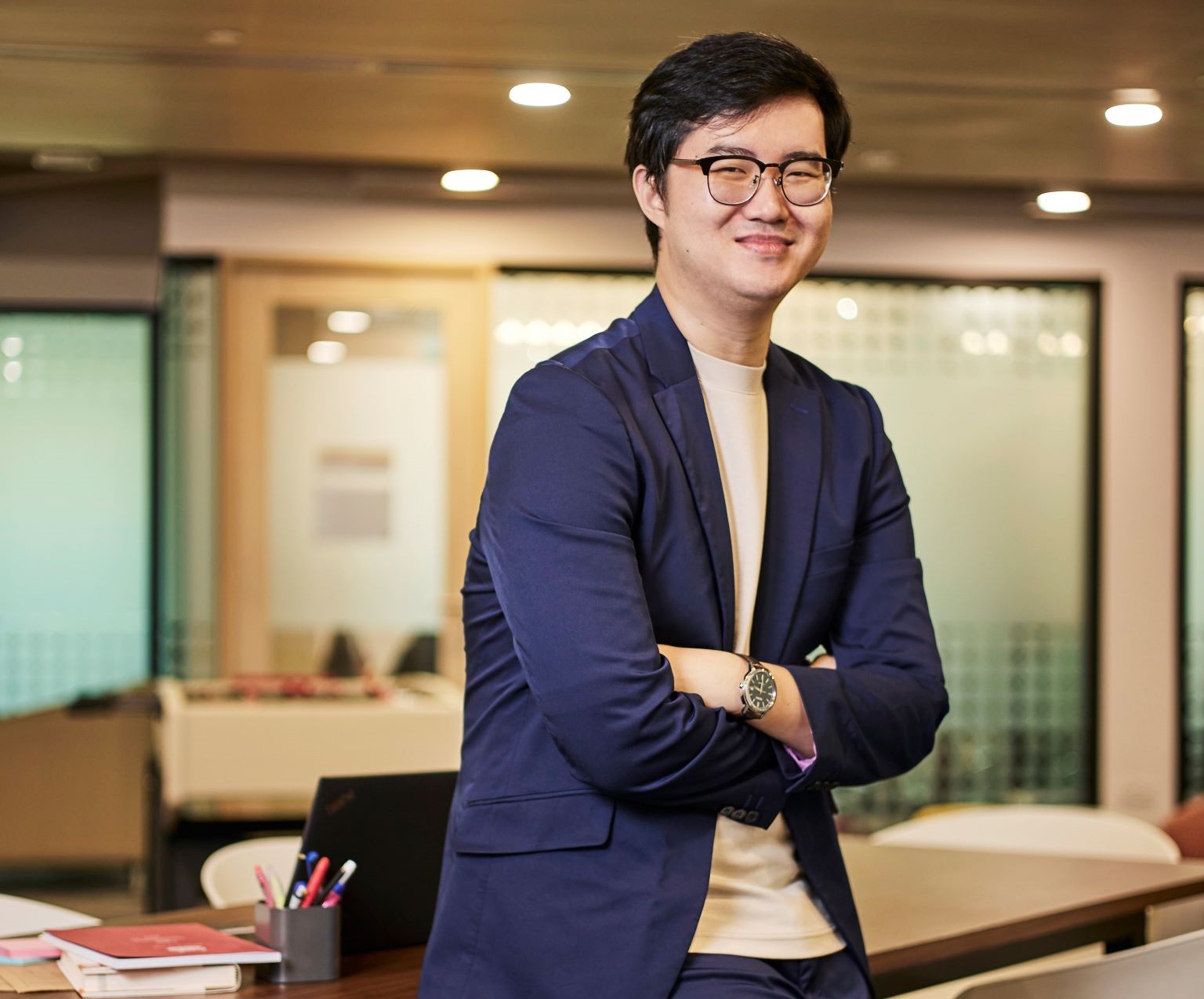
Just like how a seasoned detective steps into a criminal’s mind, a vigilant auditor anticipates how loopholes might be exploited.
At the Auditor-General’s Office (AGO), this investigative mindset is crucial to its mission of enhancing public accountability and strengthening the financial governance of the public service, says Khoo Yi Jin, an assistant director at AGO.
“As an auditor, you need to think in a nimble and agile way to catch a crook,” says the 31-year-old.
“During audit planning, I often find myself asking the question: ‘If it were me, how would I game the system?’. That is one good way to identify potential flaws and loopholes.”
One of the projects he was involved in was auditing $463 million worth of dental and medical claims made by 177,190 civil servants, pensioners and their dependants across three million transactions over a 27-month period.
“Singapore prides itself on having a very clean and world-class civil service, so public trust, transparency and accountability are important qualities we have to uphold.”
– Khoo Yi Jin, recipient of the Public Service Commission Scholarship
Yi Jin was unfazed by the staggering scale of the numbers. To him, they were pieces of an intricate puzzle that would help him and his colleagues ensure public monies are being properly accounted for.
Using data analytics, the team identified some 9,500 possible erroneous claims. Although this was only a fraction of the three million claims that were made during the same period, it still amounted to approximately half a million dollars in potential overpayments.
These findings, along with recommended actions, were flagged in the AGO’s annual report published in July 2021.
AGO auditors like Yi Jin carry out their work independently and without external pressure or influence.
“Singapore prides itself on having a very clean and world-class civil service, so public trust, transparency and accountability are important qualities we have to uphold,” says Yi Jin, who is also a Public Service Commission (PSC) scholar.
“If auditors don’t come in to check that systems, controls and processes are in place to ensure proper governance, how then can we proudly say that our public service doesn’t have these problems?”
Yi Jin never imagined becoming a public sector auditor. Drawn by his interest in mathematics and problem solving, he majored in accountancy and business at Nanyang Technological University on a PSC Scholarship.
The scholarship appealed to him primarily because it offered the chance to experience various roles across different public service agencies. “I thought that might be a good place to start,” he says.

The PSC scholarship also included his master’s in public policy at University College London. This was where he first learnt about the work of AGO while he was considering his job options in the civil service.
“That opened up a new door for me,” he recalls. “Previously, my impression was that audits were only performed by the private sector.”
Yi Jin read through many of AGO’s past annual reports and discovered that AGO’s work extended well beyond crunching numbers. From auditing multi-million-dollar contracts to financial support schemes, he realised that AGO’s work touched virtually every aspect of government operations. “I saw different ministries and diverse audit projects – all with a clear objective to help improve processes in the civil service,” he says.
Since joining AGO in 2019, Yi Jin has embraced the various challenges of public sector auditing. While PSC scholars typically rotate across agencies to broaden their skill sets, he chose to specialise in audit, finding his calling in this unique combination of analytical thinking and contribution to public service.
Gone are the days of manually checking physical receipts and volumes of files and documents. Auditors at AGO now leverage digital tools like robotic process automation and data visualisation software to automate routine tasks.
AGO has also brought in data scientists and analysts to tackle more complex analyses. Yi Jin recently collaborated with this team to develop a machine learning tool to detect anomalies. This helped to strengthen AGO’s audit capabilities.
To further broaden his expertise, Yi Jin is currently on a one-year attachment with DBS Bank’s group audit department. As part of his work, he has gained insights into how the department leverages Agile methodology, data and artificial intelligence to strengthen audit assurance, and foster transparency and trust in the organisation’s operations.
“It is exciting to experience working in a different sector and learn industry best practices from one of Asia’s leading banks, including how the audit function can be transformed to be future-ready,” he adds.
When he returns to AGO, Yi Jin looks forward to applying these fresh insights to new cases.
“With 16 ministries and over 60 statutory boards in Singapore, each with very interesting processes, the spectrum of audits available to us is incredibly wide,” he says.
“I will continue to work hard and hope that one day, I can look back on my career knowing I have made a meaningful difference to fellow Singaporeans and our country,” he says.