Two weeks into his two-month internship in 2021, Joey Chang witnessed first-hand the important role played by the Immigration and Checkpoints Authority (ICA) in border security. A team of ICA officers had detected suspected drug paraphernalia during consignment checks at Changi Airfreight Centre.
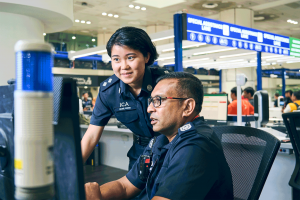
What stood out the most to Joey, then 23, was how ICA’s radiographic image analysts (RIAs) could immediately spot and flag abnormalities in scanned images of consignment goods. “I couldn’t tell if anything was wrong, but it only took the RIAs a few seconds to identify the illegal item,” says Joey.
A physical inspection of the consignment by another team of officers ultimately confirmed the RIAs’ suspicions, highlighting how human expertise works hand in hand with advanced detection and scanning technology. “That episode solidified my decision to join the ICA,” says Joey.
“It is important to retain a people-centric approach to developing technology and policies as ultimately, solutions should be rooted in and address the concerns of the general public.”
– Joey Chang, recipient of the MHA Uniformed Scholarship (ICA)
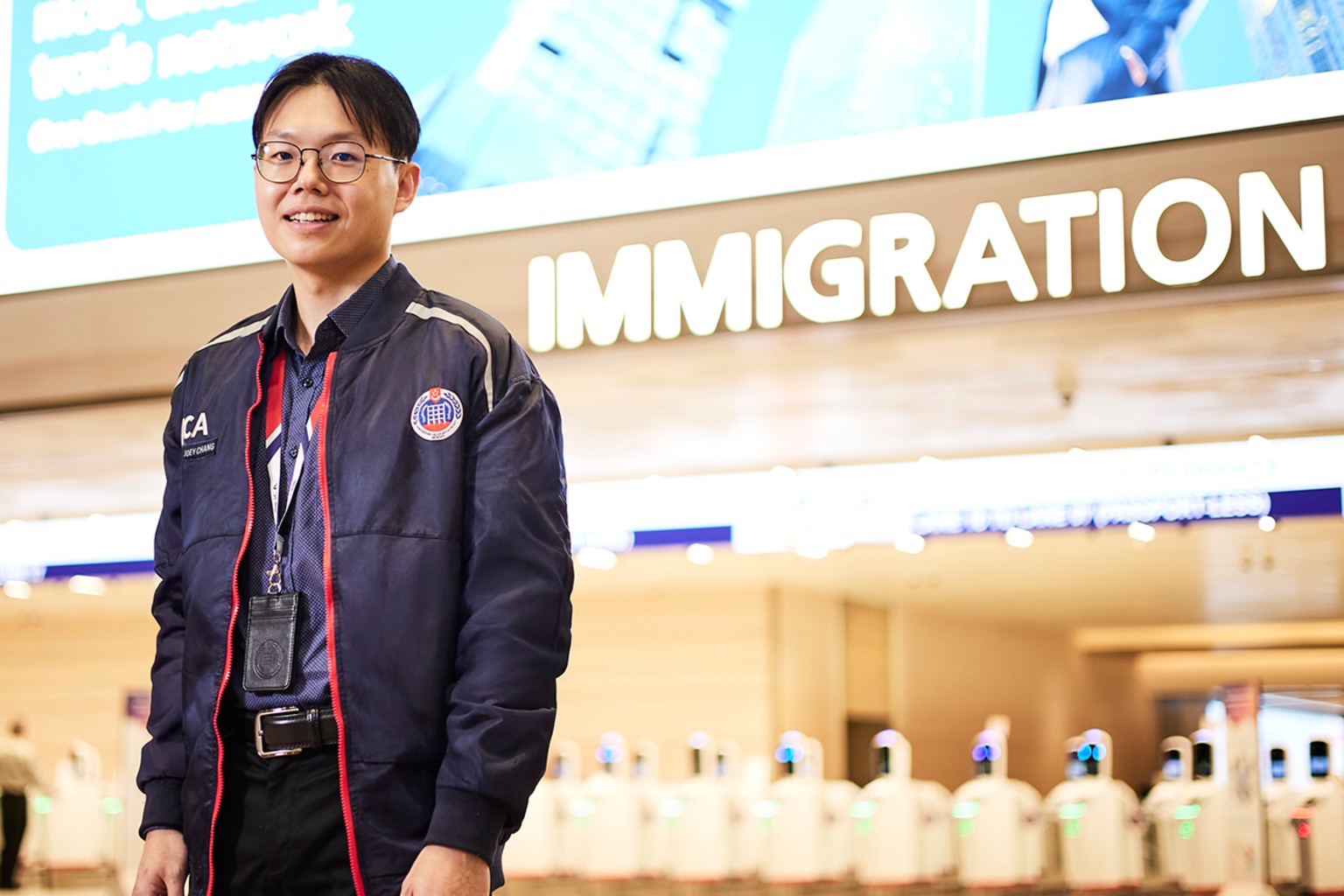
Now 26, Joey admits that he initially had little knowledge about what ICA does. The turning point came during a 2019 career fair that led to an internship with ICA, where he observed the agency’s vital role in safeguarding Singapore’s borders. He was particularly drawn to ICA’s innovative use of biometrics, automation and passport-less clearance systems, reinforcing his desire to join an organisation that is leading the way in border clearance innovation.
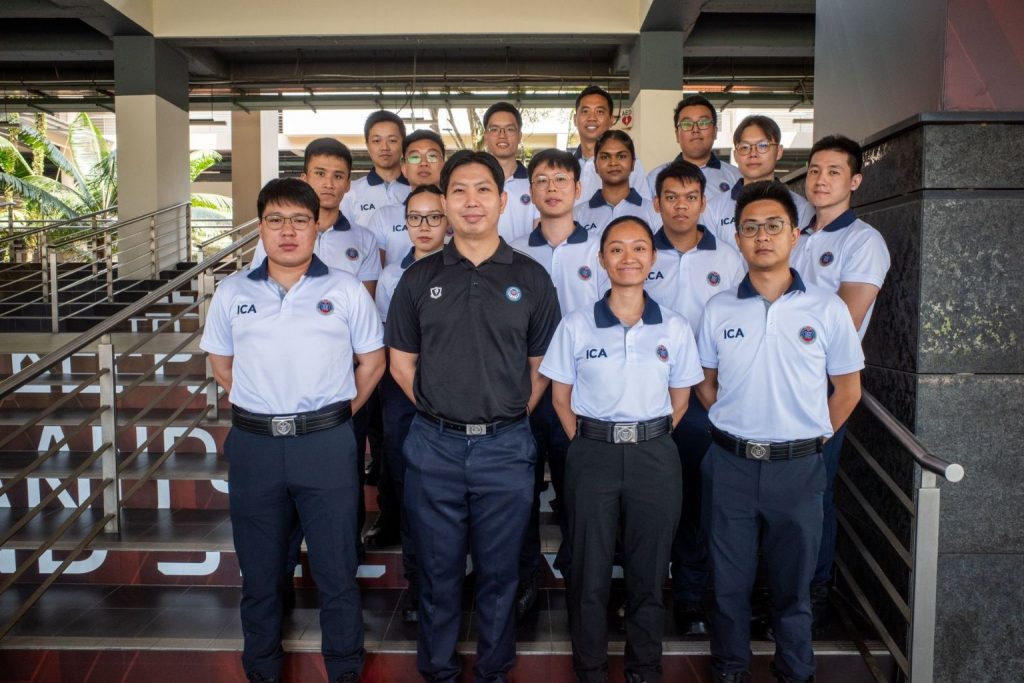
“That was when I decided to apply for the scholarship with the Ministry of Home Affairs (MHA),” says Joey, an inspector trainee currently undergoing basic training at the Home Team Academy.
During his first internship, he was attached to the corporate communications and service division where he was given a sneak peek of what has become a full-fledged reality today: passport-less immigration clearance at Changi Airport. At the time, he was with the team that prepared news releases and media engagements to announce plans of the Automated Border Control System as part of the New Clearance Concept (NCC).
Five years later, NCC has made automated clearance available to all travellers at air and sea checkpoints, allowing Singapore residents and eligible foreign visitors to clear immigration without presenting their passports. This shortens the process from 25 seconds to 10 seconds.
“It is incredibly heartening and gratifying to see something that I first encountered as a trial in 2019 now fully realised and implemented,” says Joey.
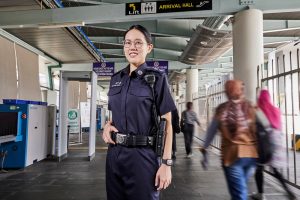
After he was awarded the Ministry of Home Affairs (MHA) Uniformed Scholarship (ICA) in 2020, he took on a second internship from July to September, where he gained behind-the-scenes insights with the ground operations team at Woodlands Checkpoint. There, he was exposed to the new protocols that helped facilitate the movement of essential supplies entering Singapore during the Covid-19 pandemic.
At the checkpoint, Joey saw officers quickly putting new health protocols into action. Swabbing stations for lorry drivers were set up in collaboration with the Ministry of Health, while tracking devices were issued to Malaysian truck drivers, with support from the Ministry of Trade and Industry, to ensure they followed designated routes.
“I was able to witness the extraordinary lengths my fellow ICA officers went to in order to facilitate cargo clearance – the lifeline of Singapore – amidst the heightened border security measures,” says Joey.
He also observed how the ICA made health declarations a mandatory part of the Singapore Arrival Card for all incoming travellers, showing how swiftly the agency responded to evolving health guidelines.
| Innovative clearance solutions Automated Border Control System Implemented on Sept 30, 2024, it allows residents and departing travellers to clear immigration without passports at air and sea checkpoints using facial and iris biometrics. QR code clearance at land checkpoints Launched on Mar 19, 2024, it enables travellers arriving and departing by car, motorcycle, lorry or bus via Woodlands or Tuas Checkpoints to generate individual or group QR codes using the MyICA Mobile App. Automated Passenger Clearance System This will be progressively rolled out at land checkpoints, offering fully automated immigration clearance for travellers in vehicles through contactless biometrics and QR codes generated by the MyICA Mobile App. The system is set to be deployed at Tuas Checkpoint in 2026. Online application for ICA’s core services Implemented in 2021, this accessible online service saves citizens and residents a trip to ICA, reducing wait times and enabling ICA to deploy officers to more value-added roles. |
Through his scholarship, Joey pursued his geography degree at the University of Cambridge in Britain, followed by a master’s in public policy at the University of Tokyo. During his year in Japan, he focused on security courses particularly relevant to Singapore’s context.
Some of the courses he took during his graduate studies showed him the potential challenges and opportunities of technological developments such as artificial intelligence (AI) on public policy and border security.
“AI and automation can help better detect patterns in criminal activity and bolster the efficacy of facial recognition and consignment clearance processes, but they can also be used for more nefarious purposes that can blur reality from fiction to damage the social fabric in Singapore,” he says.
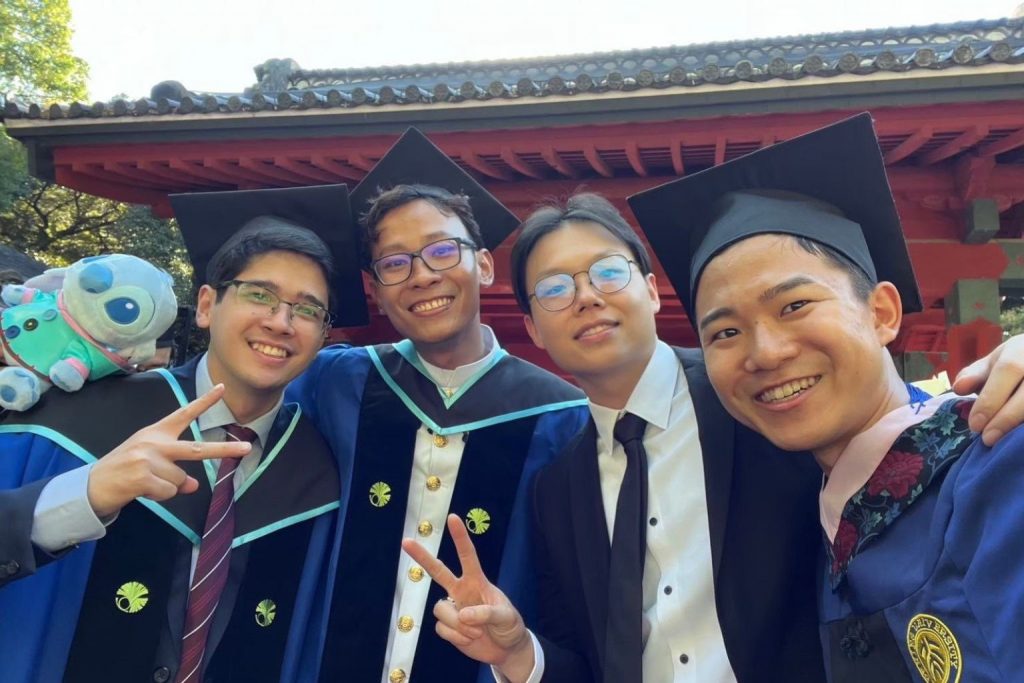
Absorbing all he has learnt during his internships and studies, the MHA scholar is now able to put into better context what it means for ICA to keep abreast of emerging technological advancements. This includes raising awareness of new initiatives to ensure that no one is left behind, particularly those less familiar with technology.
“I have learnt that it is important to retain a people-centric approach to developing technology and policies as ultimately, solutions should be rooted in and address the concerns of the general public,” says Joey.
To students who are not sure which scholarships to apply for, he advises: “Don’t rush into applying for scholarships. Consider internships with the ministries or agencies you are interested in first, so you can gauge the level of suitability for a long-term career.”
| About the MHA Uniformed Scholarship Depending on your interests and aspirations, this scholarship will allow you to kick-start your leadership journey as a uniformed officer in one of five Home Team departments: Singapore Police Force (SPF), Singapore Civil Defence Force (SCDF), Immigration and Checkpoints Authority (ICA), Singapore Prison Service (SPS) and Central Narcotics Bureau (CNB), or as a paramedic with SCDF. |
This article is brought to you by the Immigration and Checkpoints Authority.