

Walking back from lunch through the busy atrium of Tan Tock Seng Hospital (TTSH) in 2020, Dr Stewart Retnam was startled when a large man suddenly approached and scooped him into a bear hug.
He did not immediately recognise this enthusiastic stranger. Then recognition dawned: This was his former patient, the man with tongue cancer whom he had cared for a year earlier as a house officer.
“He remembered everything I had done for him – all the daily check-ins, arranging his operations, the paperwork,” says Dr Retnam, 33, now a senior resident in the National Healthcare Group (NHG)’s Infectious Diseases Residency Programme. “Even today, when I’m having a difficult day, I think back to this moment.”
That unexpected reunion did more than remind Dr Retnam of medicine’s impact; it affirmed a career path he had not always been certain about.
As a teenager at junior college, he was fascinated by the medical TV series House, and how the doctors in the show unravelled the mystery of patients’ conditions. Eager to find out what medicine would be like as a career, he went on two medical attachments shadowing doctors, one at TTSH and the other with its Tuberculosis Control Unit (now the National Tuberculosis Care Centre).
“They were very meaningful experiences. I saw the difference that doctors can make in people’s lives, but even then, I was not fully convinced that it was my calling. I wasn’t sure that you can really know what it is like to work as a doctor until you are actually one,” he says. “Still, I took the chance and applied to medical school. I am very fortunate that I have liked the job more and more at every stage. After going to medical school and working as a doctor for many years, I can’t imagine doing anything else.”
His passion for the job seems to have paid off as Dr Retnam has won multiple awards over the course of his career so far. These include the NHG Residency Peer-Teaching Commendation Award in 2023 and 2024, and the NHG Most Valuable Player Award in 2024, given to junior and senior residents, medical officers and postgraduate year-one residents who have displayed outstanding character in their work.
“I am very fortunate that I have liked the job more and more at every stage. After going to medical school and working as a doctor for many years, I can’t imagine doing anything else.”
– Dr Stewart Retnam, recipient of the LKCMedicine Scholarship
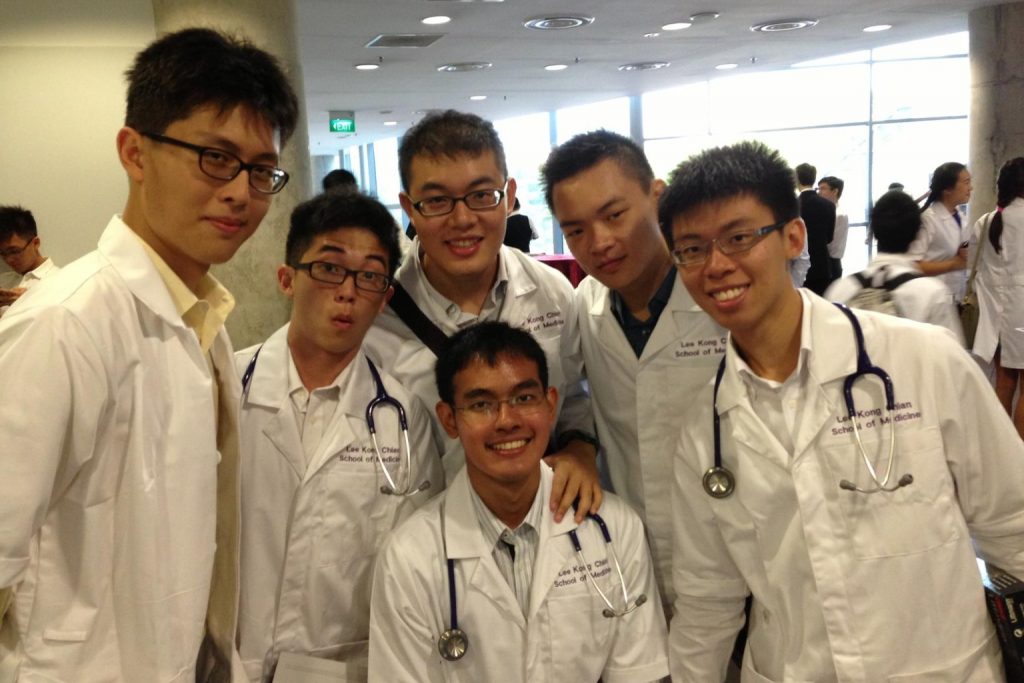
After junior college, he set his sights on Nanyang Technological University’s then-new Lee Kong Chian School of Medicine (LKCMedicine), becoming part of its pioneer cohort in 2013 and receiving its LKCMedicine Scholarship, which covered tuition fees, with allowances for living, books and computer equipment.
Although his parents could have paid for his studies, the scholarship was “a big financial relief”. He says: “Medical school is not cheap, and I have two younger brothers who were in secondary school and junior college then. Getting the scholarship helped put my parents’ minds at ease and enabled me to concentrate on my academic studies.”
He picked LKCMedicine partly because of its focus on using state-of-the-art technologies in teaching and learning. These included not just iPads but plastinated specimens – preserved human bodies and parts – and interactive digital cadavers for anatomy classes. “These were quite advanced ways of learning that were not common practice at the time,” he says.
The strong grounding in adapting to and harnessing cutting-edge technologies has served Dr Retnam well in his work, part of which involves teaching trainee doctors and medical students. “Artificial intelligence and generative pre-trained transformer (GPT) models are changing how medical education is delivered. LKCMedicine’s use of technologies made me comfortable with riding such waves and keeping pace with such shifts.”
He was also drawn to LKCMedicine’s team-based learning pedagogy which emphasises teamwork and developing communication skills. Students typically complete question sheets individually first, then discuss their answers in groups to reach a consensus, which they later present to the rest of the class. “You have to learn how to explain your answers and resolve differences in opinions amicably,” he says.
These lessons have been invaluable in his daily work, especially when he discusses his patients’ care with their relatives who reject his recommendations and have their own ideas. “One useful thing that I do is to say out loud that we all want what is best for the patient,” says Dr Retnam. “When I say that and when they hear it, it reminds all of us that we are on the same side, so we can work together to reach a constructive solution.”
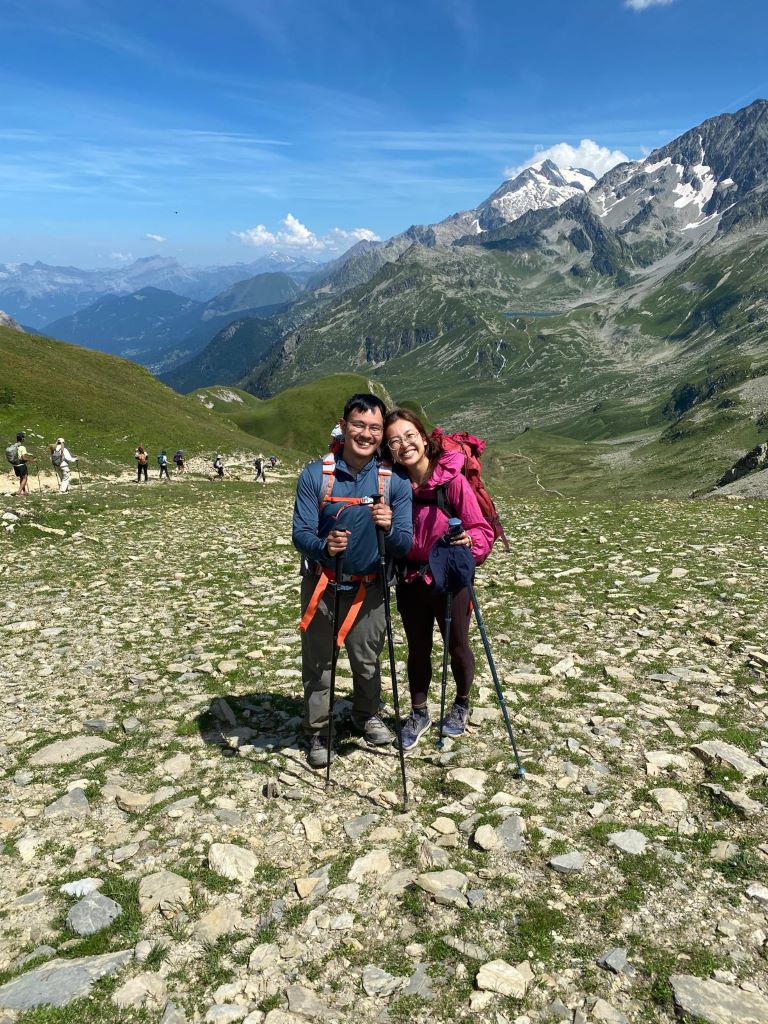
Attending LKCMedicine also transformed Dr Retnam’s life in another major way. He ended up marrying a fellow scholar in his cohort, who is also now a doctor. In fact, his wife gave him a sage piece of advice someone else shared with her: “Health is a value, and just like other values – such as family, finances, career and so on – everyone prioritises their health differently.”
He cites the example of elderly patients with diabetes who would benefit more from eating brown rice than white rice but may choose not to make a fuss when their family cooks or orders white rice for meals. “They have prioritised their social well-being and interactions with their family over their health. I am not saying that I encourage this, but we have to remember that a patient may weigh other values more when they make healthcare decisions.
“Time and again, my wife’s words have helped me to understand some patients’ choices and motivated me to find workarounds. For example, for elderly patients, I may talk to their children. If the children accept the need to make dietary changes for their parents, you have a new way of helping the patient,” he says, adding with a laugh: “My wife is very wise.”
After graduating from LKCMedicine in 2018, he started work as a house officer at Singapore General Hospital’s orthopaedic surgery department before joining NHG later that same year. He urges those who are considering going to medical school to apply for the LKCMedicine Scholarship. He shares: “I did wonder whether I was qualified enough to get the scholarship and, if I got it, if I would be able to consistently maintain the high standards expected of a scholar.”
“Now, I would say that scholars are like everyone else. We are not exceptional people who excel every single day, do everything right and always get top marks. We have finite energy and other commitments in life and just try our best,” says Dr Retnam. “Don’t have a set image of what a scholar should be. If you want the scholarship, give yourself the chance and apply for it.”