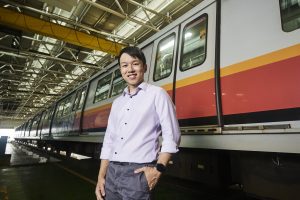
Ever wondered how trains are powered? At their heart is a complex network of wires and cables that controls everything from your passenger experience to the train’s movement.
For Adam Wee, a recipient of the Singapore Rail (SGRail) Industry Scholarship, these little known aspects of train engineering came to life during his internship with SBS Transit (SBST).
“Working on the equipment and devices located within the train was very interesting,” says the 26-year-old. “You only get the chance to see this if you are stationed at the depot.”
Adam’s interest in the world of engineering began in his childhood.
“As a child, I loved problem-solving. I was always curious about how various mechanisms – like a fan or a clock – work,” he says.
It is no wonder he is drawn to the complex mechanical systems that power MRT trains.
“Everything regarding the train can be explained by science. To properly rectify any problem, we must first be able to understand it.”
– Adam Wee, recipient of the SGRail Industry Scholarship
“I was fascinated that these giant electric vehicles can transport so many people to so many places,” says the train enthusiast.
To fulfil his curiosity, he took up a bachelor’s degree in engineering with honours in sustainable infrastructure engineering (land) at the Singapore Institute of Technology.
“My interest and enthusiasm for this field truly deepened during my time at university,” says Adam, who graduated last month.
The curriculum in his course covered complex systems in the rail industry such as rolling stock (the industry term for train vehicles) and rail signalling (which controls the train’s movement, such as its speed and direction on the tracks).
As a budding engineer, this knowledge gives him a deeper appreciation of the critical role public transport plays in getting millions of commuters from one place to another, and in driving the nation’s productivity.
During his SBST internship at the North East Line (NEL) depot, Adam finally got the opportunity to see the theories of train mechanics play out in real life.
It was also his first time entering a siding. Sidings are dedicated tracks in the depot where trains are parked when they are not in service.
“Having only ever seen trains in operation as a public transport user, it was a ‘wow’ moment to see them parked at the depot or undergoing maintenance,” he says.
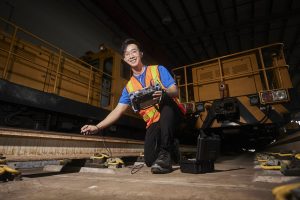
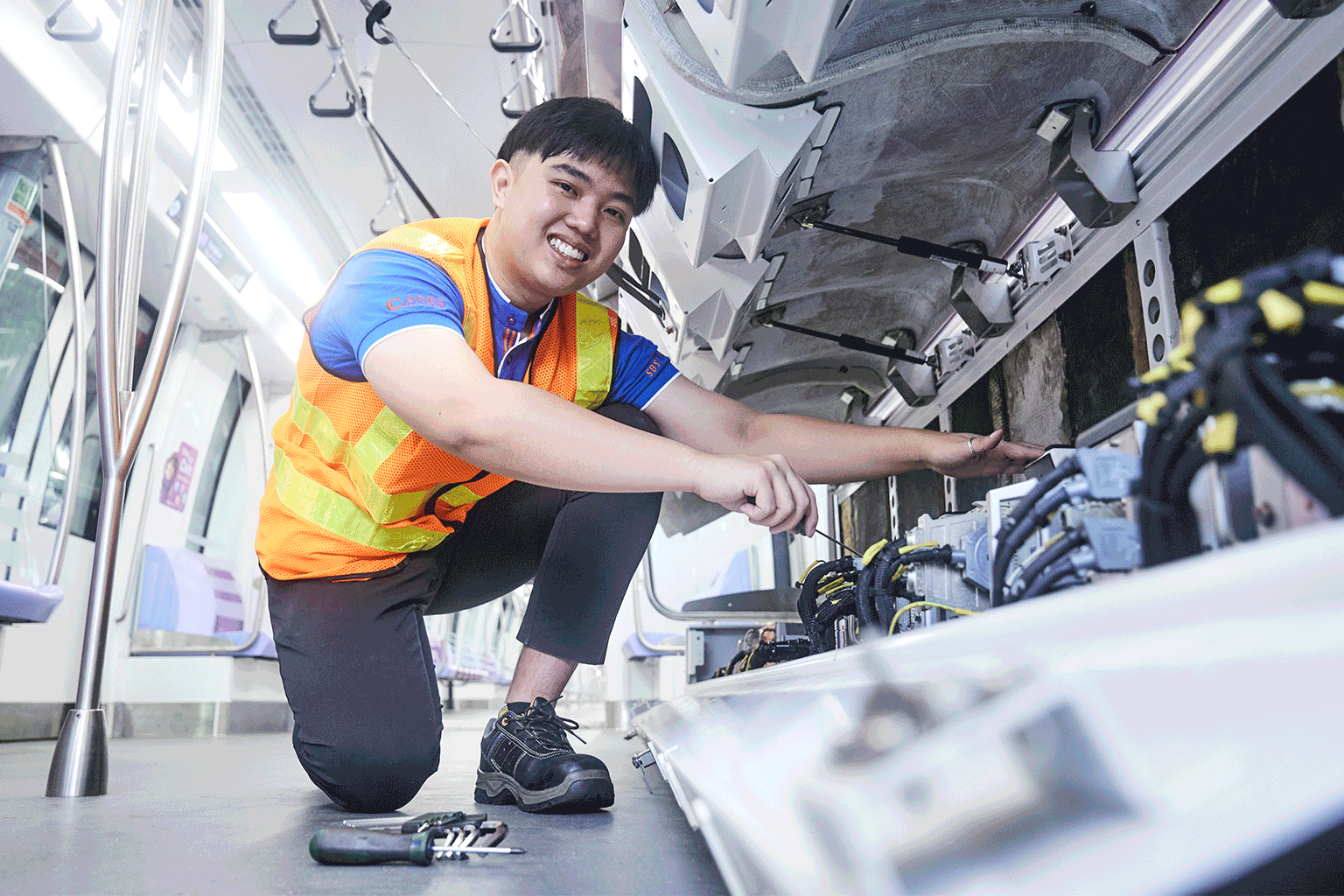
Equipped with safety gear like a high-visibility vest and safety shoes, Adam spent much of his time during the one-year internship working inside or under the train.
Armed with the necessary tools, his job involved modifying parts or installing new ones for better train performance.
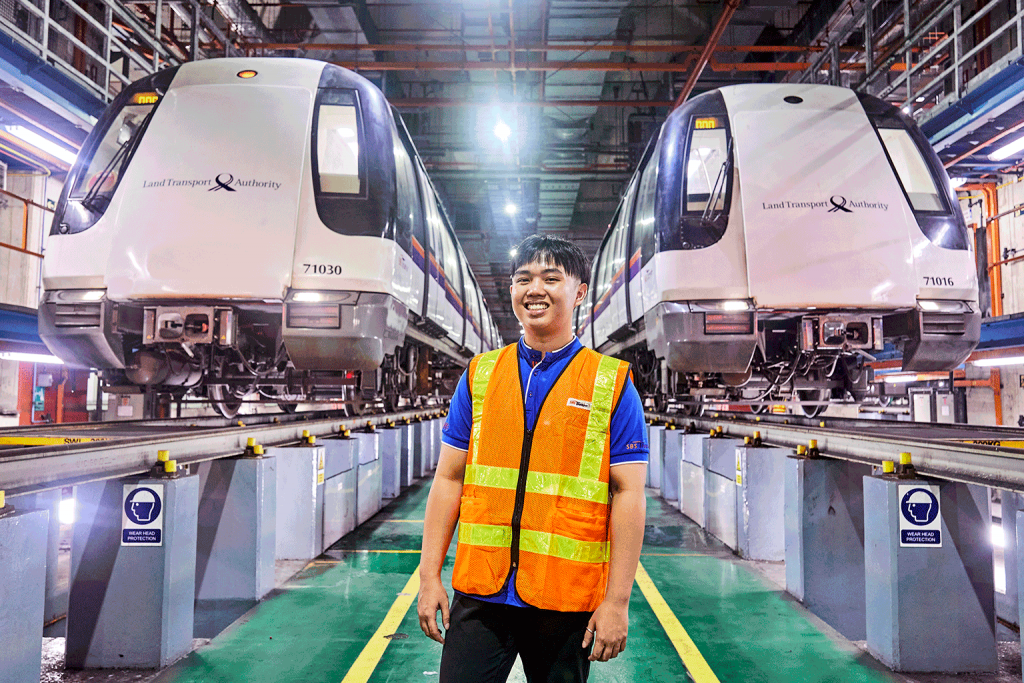
Adam has also worked on projects that track real-time data to detect abnormal patterns in train components, from the vehicle’s wheels to the electrical relays powering the train. These analyses help engineers decide when maintenance or replacements are needed.
“The hands-on experience showed just how much there is to learn and appreciate about the intricacies of the rail industry,” he adds.
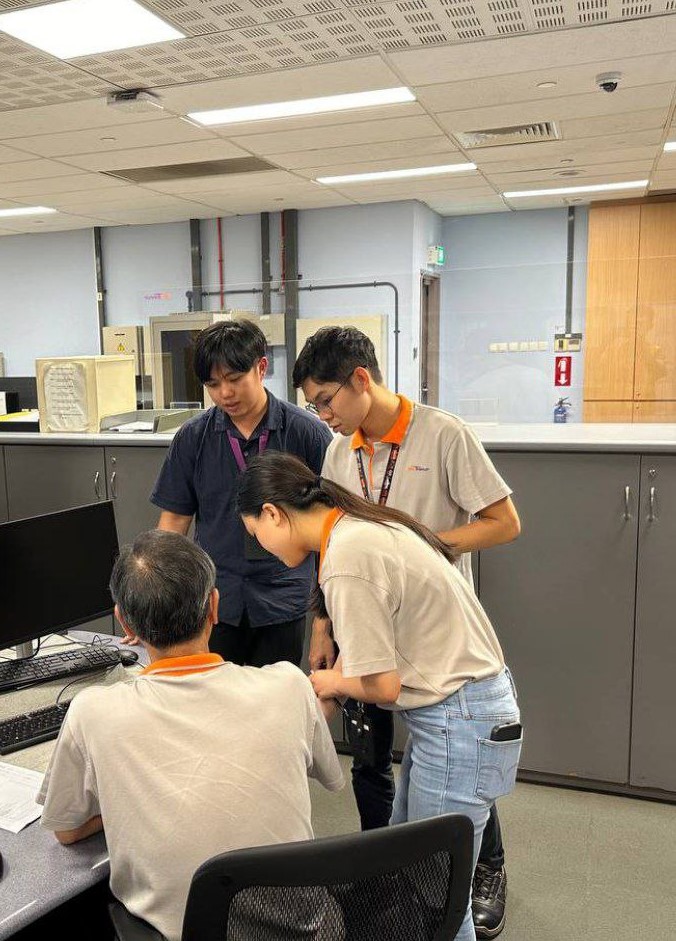
Today, whenever Adam spots a familiar carriage number during his regular commute, he takes pride in knowing his work has contributed to that train’s smooth operation.
It is a reminder that SBST rail engineers like him help to make train journeys safe and reliable for over half a million commuters who take the NEL daily.
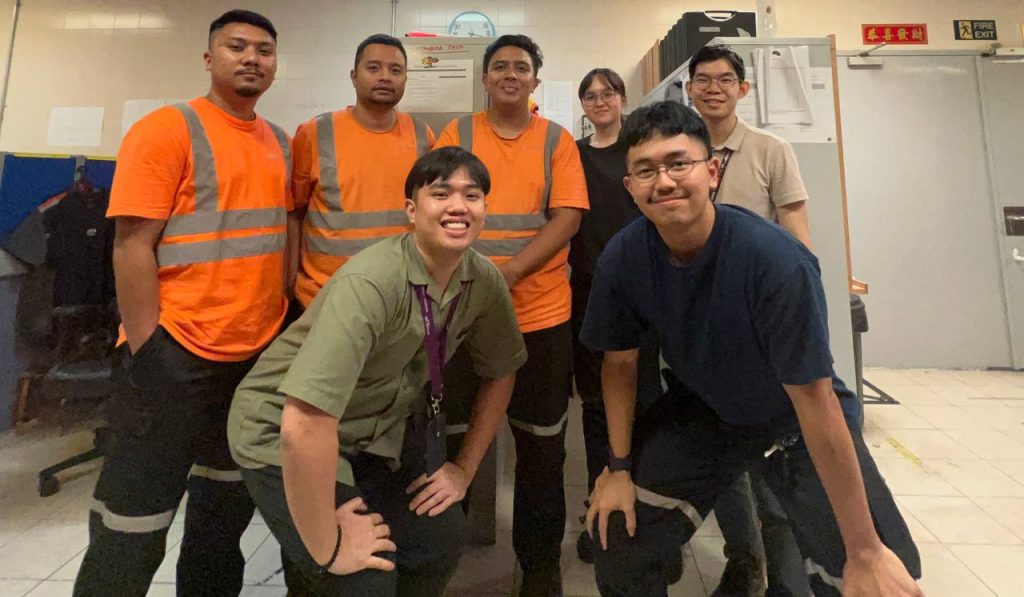
Through the internship, Adam found his place among fellow rail practitioners who share one clear mission: ensuring comfortable commutes for Singaporeans.
Like how different train components must work together for reliable service, maintaining the rail system as a whole requires collaboration between technicians, engineers and management.
Later this year, Adam will join SBST as a full-time engineer. He will lead a team of assistant engineers and technicians.
He says that he looks forward to learning from more experienced team members.
However, his learning will not stop there.
Inspired by advice from Mr Lee Hwee Kiat, NEL’s head of rolling stock, Adam will further his studies by taking a master’s degree in mechanical engineering.
“During a troubleshooting session, Mr Lee reminded us that everything regarding the train can be explained by science. To properly rectify any problem, we must first be able to understand it,” he says.
With his sights set on becoming a chartered engineer, Adam is eager to deepen his expertise to help keep Singapore’s world-class rail system running smoothly and efficiently.