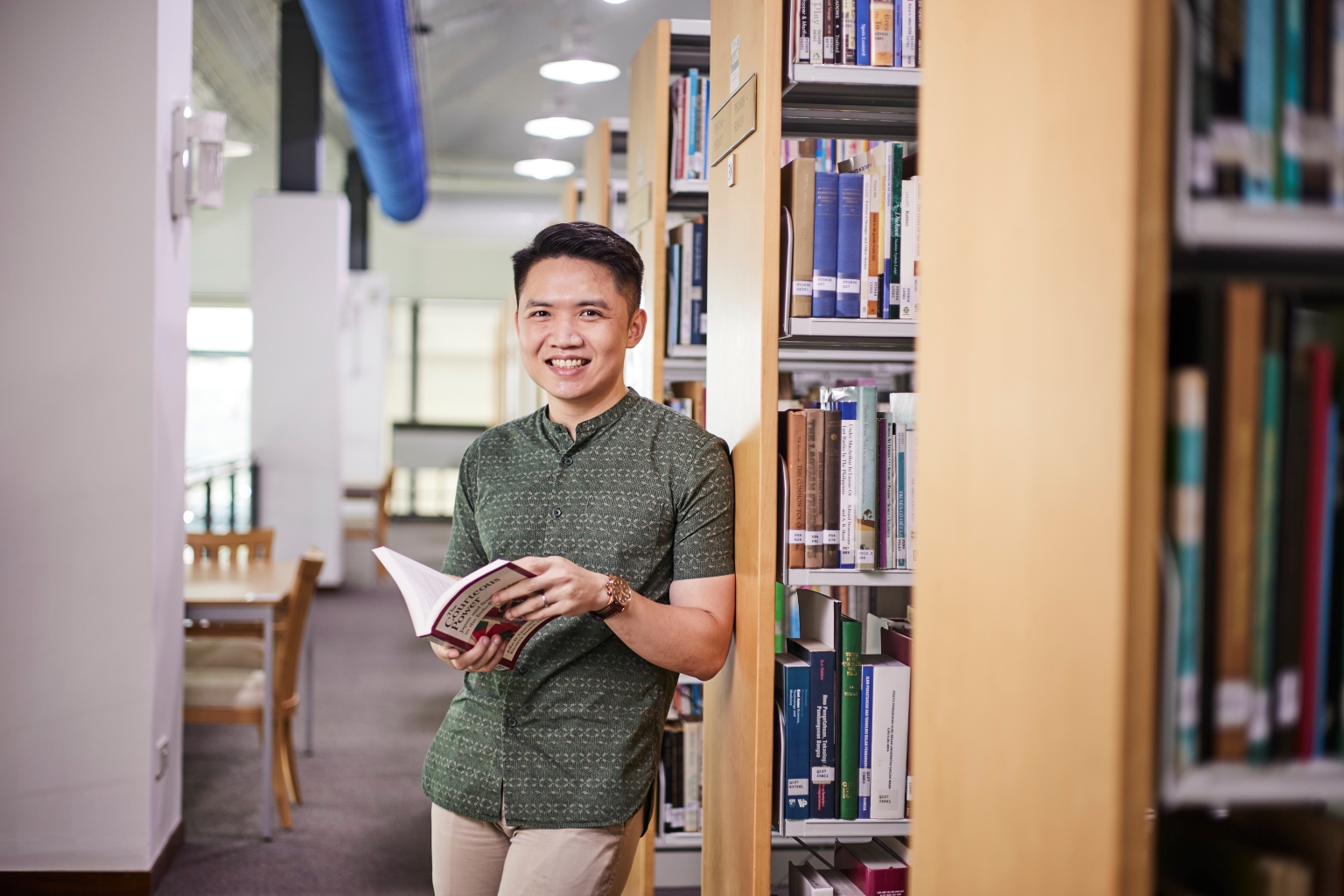
For his job, Eugene Tan pitches story ideas, pens articles and takes on his editor’s questions to sharpen his narrative.
Lest one mistakes the 29-year-old for a journalist, he is a research officer at ISEAS – Yusof Ishak Institute (ISEAS), crafting analyses for policymakers, diplomatic and business communities, as well as think tanks from around the region.
From concise 800-word commentaries to detailed 5,000-word articles, Eugene’s pieces appear on Fulcrum, the institute’s publicly accessible blog.
His work helps to shape discussions about the region’s past, present and future.
“When I began receiving requests to speak about the topics covered in these pieces, I realised how much weight my words carried,” he says.
“Someone high up is taking note of what you are saying and thinking that you are saying something important.
“As a young scholar, it is both daunting and rewarding to know your analysis shapes how people understand the region.”
Working alongside over 28 researchers at the institute – from research associates to senior fellows – Eugene studies and provides insights on socio-political, security and economic trends and developments in South-east Asia.
Beyond briefing diplomats and regional leaders, he coordinates research projects and helps organise events that bring delegates together. He also lends a hand in producing the institute’s podcast, Dialogues at Fulcrum.
Eugene’s journey into academia began at River Valley (RV) High School when he role-played as a country delegate and director of the Security Council in RV Model United Nations (RVMUN) through his co-curricular activity, the Humanities and Current Affairs Society. He would debate global issues like a real diplomat.
That early taste of international relations led him to study political science and sociology at Singapore Management University (SMU).
He later earned a master’s in international relations at the London School of Economics and Political Science on the Tun Dato Sir Cheng-Lock Tan MA Scholarship. It was offered by ISEAS, one of a few organisations in Singapore that provides scholarships to those interested in becoming academics.
“For those considering a career in academia, this is the scholarship for you as you get to see what it is like to be behind the scenes in this field,” he advises.
Today, Eugene is no longer playing pretend like in secondary school.
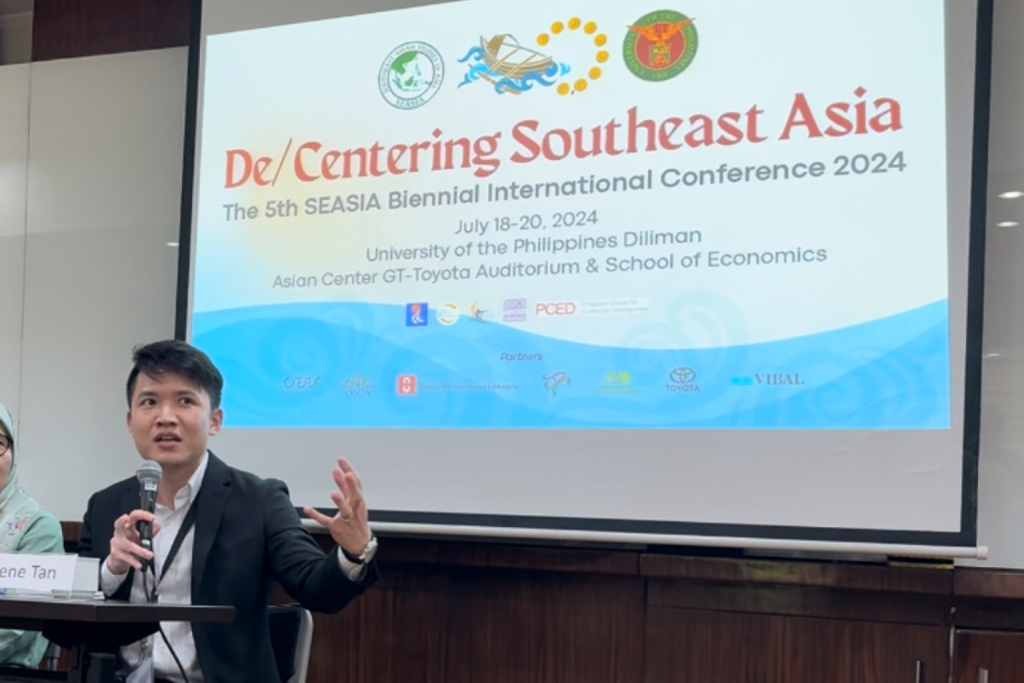
Within one year of joining ISEAS, he had the opportunity to present his research findings to diplomats and policy experts at overseas conferences, often facing rooms filled with holders of research doctorates who are decades his senior.
“As a young scholar, it is both daunting and rewarding to know your analysis shapes how people understand the region.”
– Eugene Tan, recipient of the Tun Dato Sir Cheng-Lock Tan MA Scholarship
At the 5th Consortium for Southeast Asian Studies in Asia (SEASIA) Biennial International Conference 2024 held in the Philippines last year, Eugene discussed his master’s dissertation on how Filipino media shapes the public’s reception of China’s soft power.
“I was speaking to scholars who had spent years studying this topic,” he says. “You learn quickly how to present your arguments with tact.”
Staying on top of his field requires constant reading, says Eugene. You will often find him spending time in the institute’s five-storey library, home to rich South-east Asian collections, including private archives of prominent regional figures which are preserved in an 18 deg C repository.
However, keeping up with regional affairs is as much a habit as it is work. Besides reading The Straits Times and The Economist, Eugene tunes in to relevant podcasts and keeps an eye out for new books that focus on his topics of interest.
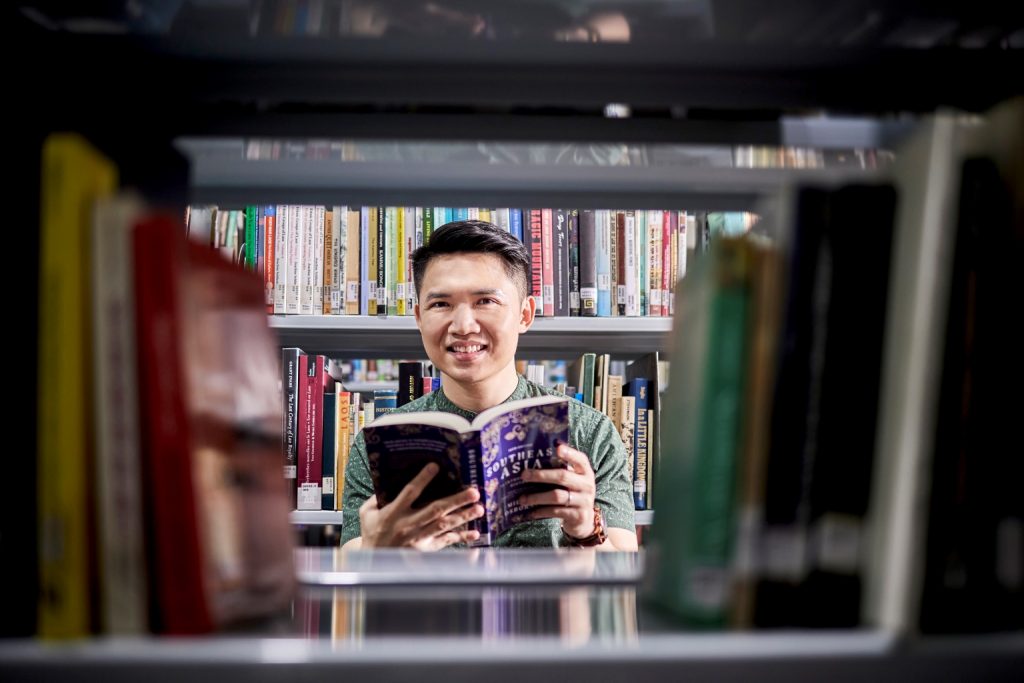
“For instance, if I am studying China’s soft power, I read things adjacent to this, like Chinese history and Chinese policymaking too,” he adds.
This appetite for knowledge sparks dynamic exchanges among colleagues, whom he enjoys sparring with intellectually, likening this to a “university study-group style vibe”. He follows up on fellow researchers’ work and sometimes responds with his own analyses.
“There is this continual process of upgrading on the job as you learn from your colleagues’ research. There is such a collegiate aspect to it,” he says.
Together with his younger colleagues, many of whom are also in their 20s, Eugene debunks the misconception that academics are elderly, bookish or stuffy.
In his spare time, the Arsenal fan watches football matches, sings karaoke and plays video games like The Assassin’s Creed. He also goes for runs and participates in high-adrenaline activities like indoor skydiving with his wife.
But his job and passion are always on his mind. He admits sheepishly: “I relax by reading a book on China to destress from my work on China.”