From unearthing artefacts to preserving history: How he’s safeguarding Singapore’s heritage
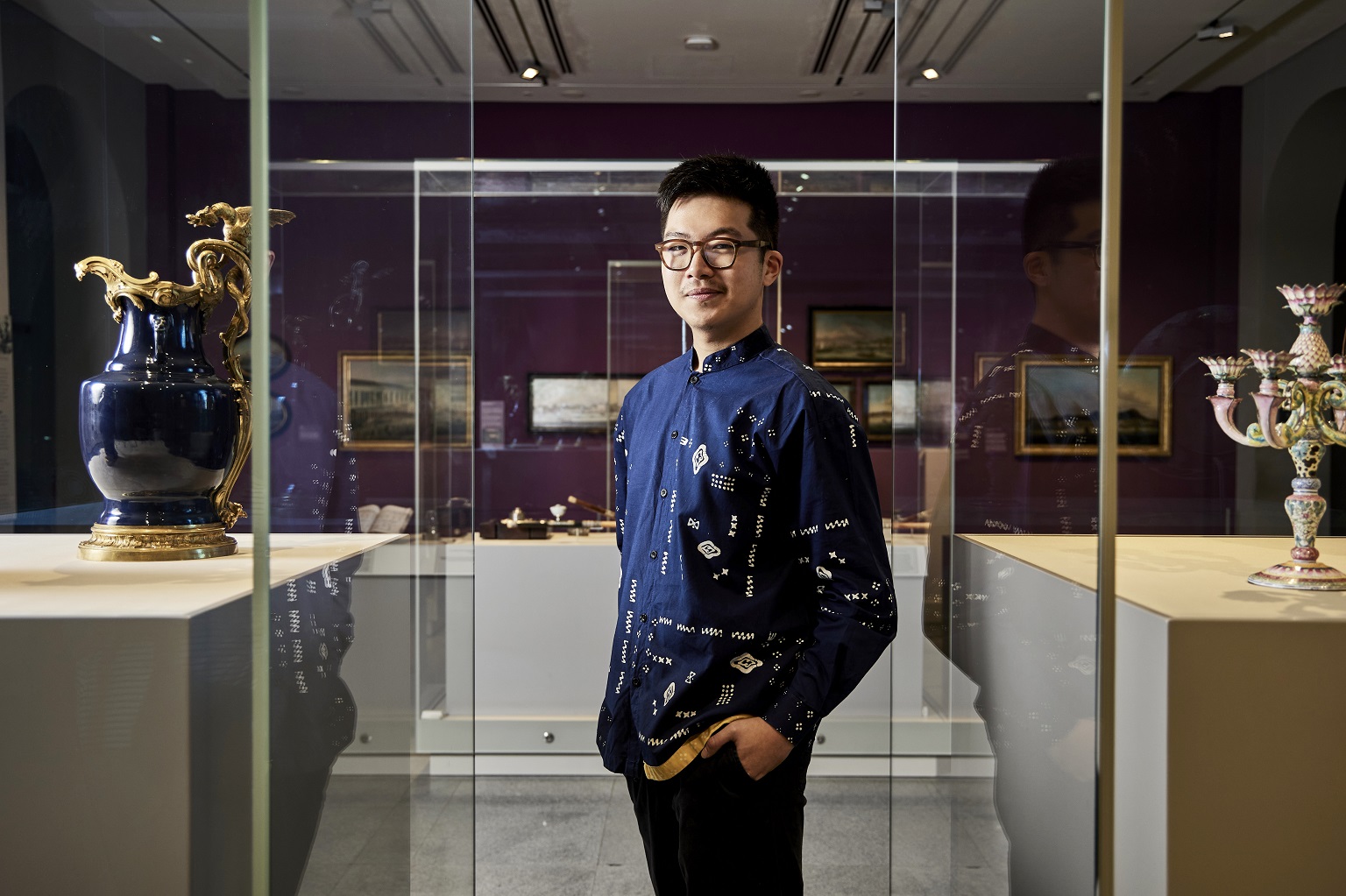
Archaeologist Gerald Sim not only tells stories of the past but he is also actively recording the present through digital documentation. PHOTO: SPH MEDIA
This NHB scholar plays a vital role in uncovering Singapore’s past and archiving it for future generations
The EZ-Link card in your wallet might one day be displayed in a museum case.
Gerald Sim, an archaeologist at the National Heritage Board (NHB), views today’s world as a treasure trove for tomorrow’s archaeological discoveries. For him, archaeology is not just about unearthing ancient civilisations; it is about preserving the stories of everyday life, both past and present.
“Archaeology is a direct link with our past. Understanding Singapore’s history is crucial as it connects us to stories larger than ourselves. Most of what we know about Singapore before 1819 is gleaned from archaeological sources,” says the assistant manager (built heritage and archaeology) at NHB’s heritage policy and research department.
He explains how archaeology helps disprove myths, such as that of Singapore as a sleepy fishing village prior to colonisation. For instance, 14th-century gold artefacts found at Fort Canning show the presence of a significant political and religious centre long before the arrival of the British here.
“Recognising this extended history of Singapore, way before 1819, can be empowering. It provides a deeper sense of identity and continuity for Singaporeans,” notes Gerald.
In Singapore’s tropical climate, archaeological remains from the 15th to 18th centuries are particularly rarer to find as the combination of high humidity and frequent rainfall accelerates their deterioration. Yet, items belonging to the more recent 19th to 20th centuries are just as important as they “connect us to that immediate past”, he says.
“This could be the pot that your grandmother used in the garden or there’s a teapot that your family has. There’s that immediate connection with the past that we cannot achieve with older finds.”
Making history accessible
Prior to joining the statutory board, Gerald always knew that he wanted to study something related to heritage and culture. When he found out that NHB supported studies in archaeology, applying for the NHB Scholarship was a natural choice.
He completed a bachelor of arts in archaeology and anthropology at University College London as he was interested in “material culture – things that people leave behind”.
“Archaeology is a direct link with our past. Understanding Singapore’s history is crucial as it connects us to stories larger than ourselves.”
– Gerald Sim, recipient of the NHB Scholarship
His current role at NHB enables him to work on developing a policy framework to make the past more accessible and understandable to the public through archaeological artefacts.
“I hope that the work my team does will help demystify the profession to the public and allow what might seem like a technical subject matter to be enjoyed by all,” he says.
Beyond telling stories of the past, he is also involved in documenting the present – including a fast-vanishing facet of Singapore life. In June 2023, he started working on a digital documentation of a kelong to raise awareness of Singapore’s maritime heritage.
One of the most heartwarming moments for him while working on the year-long project was seeing the smiles of the owners when they received a digital keepsake of the kelong that would live on even after the physical structure is no longer around.
A passionate community
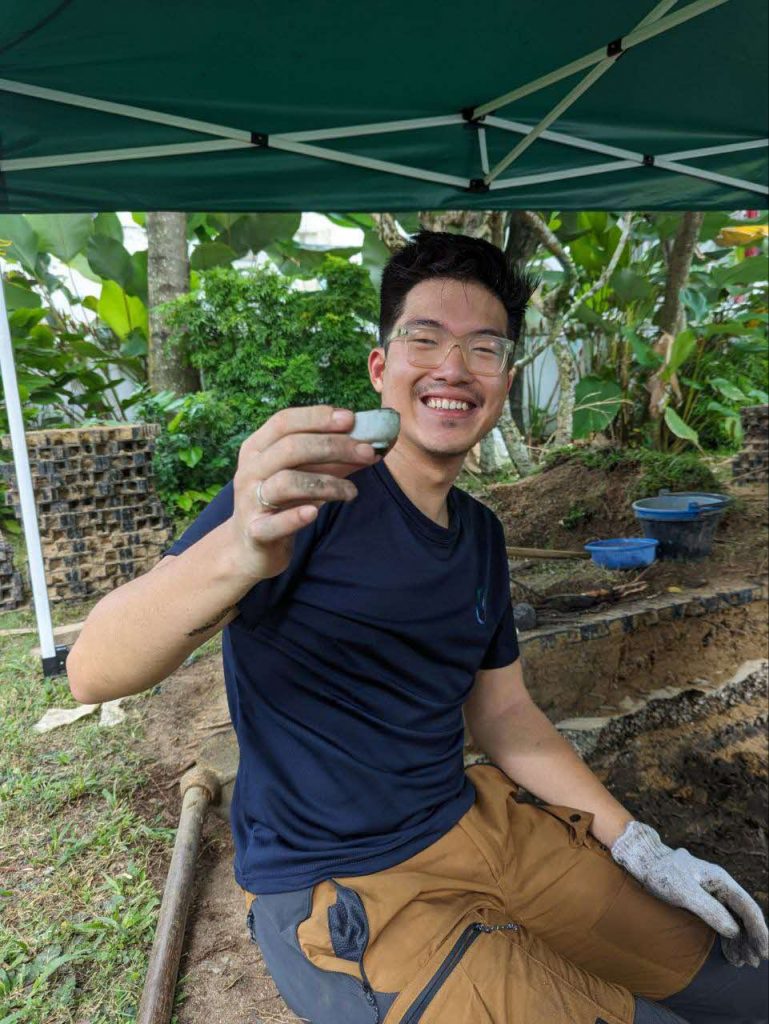
Gerald volunteering at an archaeological dig in Singapore, where he uncovered a 19th to 20th century teacup. PHOTO: COURTESY OF GERALD SIM
Apart from unearthing the past and preserving the present, Gerald says he is excited about using technology to tell Singapore’s stories.
His colleagues in the organisation, design and innovation department make use of tools like 3D scanning, underwater scanning and aerial photography to preserve and convey history. They are also exploring how virtual reality and augmented reality can be applied to make heritage come alive in new ways.
Gerald hopes more people can join the field, adding that Singapore is facing what he calls an “archives crisis”. Similar to the United Kingdom, Singapore faces the challenge of managing an overwhelmingly large collection of artefacts. Yet, very few know about them and the stories that lie behind them. There is also a backlog of excavated artefacts that remain unseen or unanalysed due to a lack of manpower, specifically in the field of archaeology.
“There are opportunities for archaeology in Singapore if you look out for it. It is a very fulfilling and meaningful career,” he says.
“I found myself in a community of passionate, like-minded colleagues. Most importantly, I love the work I do.”