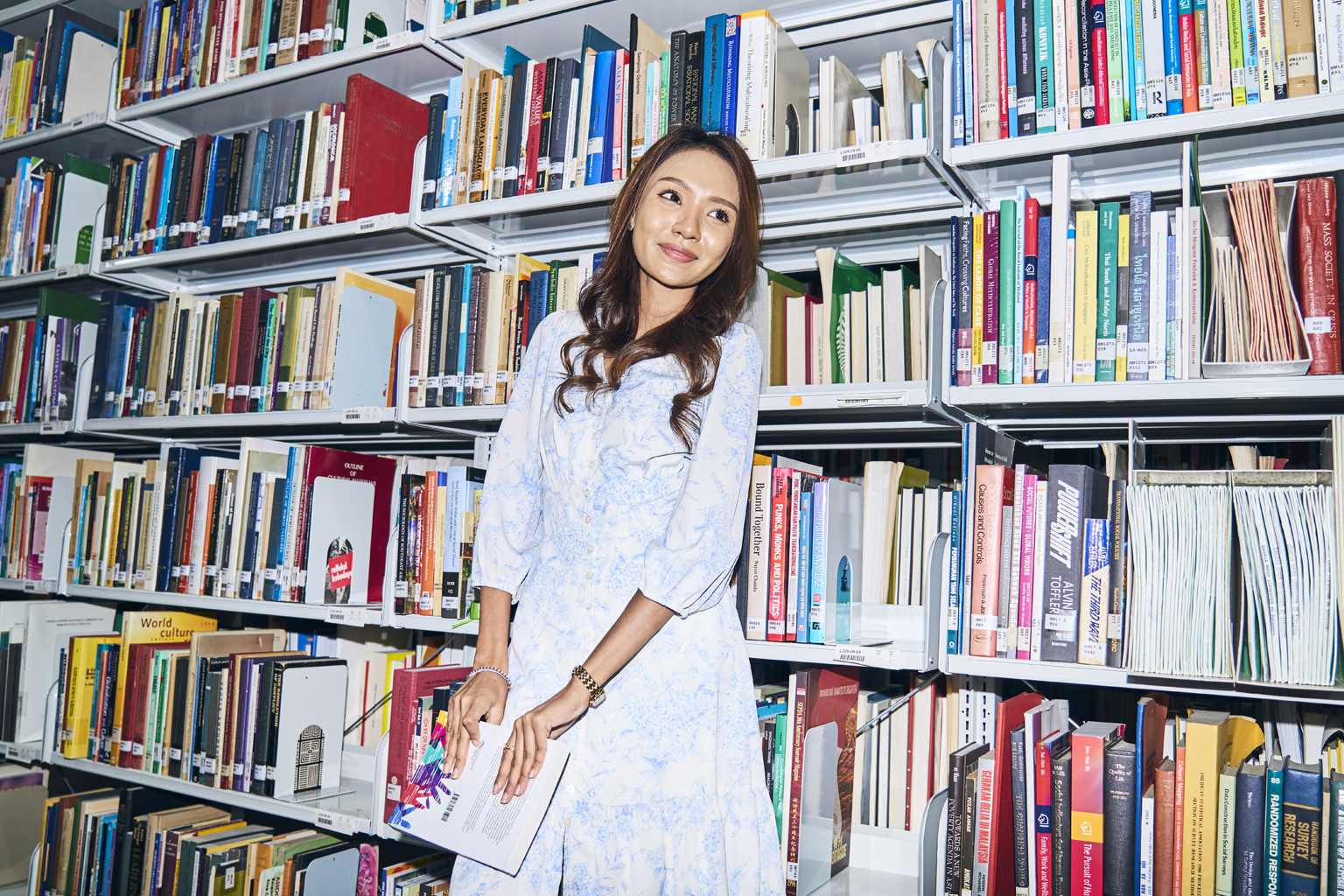
Fresh out of the National University of Singapore three years ago, Siti Suhaila Harith signed up for a three-month internship at the ISEAS-Yusof Ishak Institute. Her goal was simple: learn more about South-east Asia beyond what she had studied as an undergraduate in political science.
What happened next surprised her. “I genuinely loved the work environment,” recalls Suhaila. “Even though I lacked subject knowledge and experience, I was given the chance to explore fascinating topics – from non-violent extremism to competing Islamic ideologies and trendsetters in South-east Asia,” recalls the 26-year-old.
That three-month stint stretched into a full year at ISEAS’ Regional Social and Cultural Studies (RSCS) programme. Suhaila assisted with projects on Islam and politics in the region, accompanied a researcher on fieldwork covering Malaysia’s 2022 General Election, and co-authored commentaries on familiar topics such as identity politics in Malaysia as well as new topics like the challenges of Thailand’s medical cannabis legalisation.
The experience was eye-opening. Suhaila realised her work was not just academic – it could inform government policy and even open doors to diplomacy.
When she came across the Tun Dato Sir Cheng-Lock Tan (TCL) MA Scholarship, she jumped at the chance to pursue a master’s in political science, specialising in comparative politics and conflict studies, at her dream university, the London School of Economics and Political Science (LSE) in Britain.
“It felt like the perfect path toward my goal of working full-time at ISEAS,” she says. “Becoming a researcher requires certain qualifications, and this scholarship would help me get there.”
At LSE, Suhaila found herself in an entirely different learning environment. Students in Britain were passionate, unafraid to ask tough questions and eager to challenge ideas.
“Initially, it was intimidating,” she says. “But over time, I learnt that it was OK to ask hard-hitting questions and explore ideas freely.”
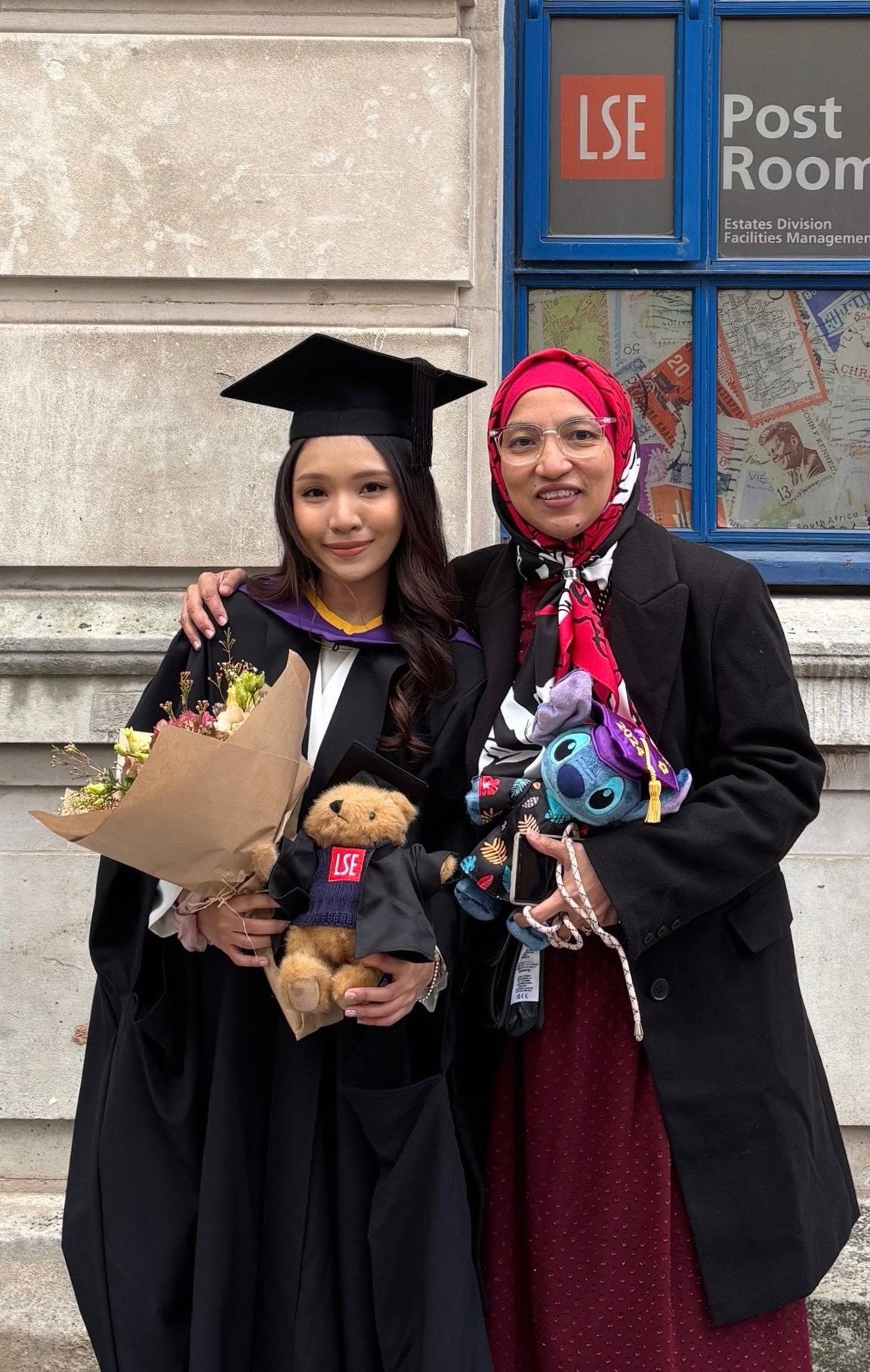
Taking modules in fields completely new to her – Latin American Politics, Political Violence and Terrorism – exposed her to perspectives that broadened her understanding of global politics. She also formed close friendships with classmates from Kazakhstan, Sweden, Ukraine, India and the US, hearing first-hand about political upheavals and reforms in other countries.
“Interacting with people from around the world and learning from their diverse experiences made me realise the importance of being culturally aware and sensitive in my work,” says Suhaila. “It’s a principle I always keep in mind now, especially since I regularly work with people from across South-east Asia and beyond.”
When Suhaila graduated from LSE in August 2024 and returned to ISEAS as a research officer, she discovered her role extended far beyond what she had imagined.
“I thought I’d continue working on the Islam project,” she says. “But I was surprised to learn I’d actually be managing projects on two completely different areas: China and South-east Asian Society, and Youth and Civic Engagement.”
At first, she was concerned – these were not her areas of expertise, and there was a language barrier for China-related work. However, she developed a genuine interest over time. Her office is now filled with books on Chinese identity in the region, and she recently co-authored a commentary on the rise of Sinophobia in the Philippines.
“Interacting with people from around the world and learning from their diverse experiences made me realise the importance of being culturally aware and sensitive in my work.”
– Siti Suhaila Harith, recipient of the Tun Dato Sir Cheng-Lock Tan MA Scholarship
What she did not expect, however, was the diplomatic dimension of her work. She has met politicians, ambassadors and ministry officials, and seen how ISEAS research directly informs policy.
Working with her supervisor on a book about non-violent extremism in South-east Asia was particularly illuminating. “It highlighted to policymakers the importance of monitoring intra-religious issues, which often go under the radar,” she explains.
Despite her packed schedule managing projects and seminars, Suhaila still carves out time to write. She is currently working on a commentary about China’s growing halal tourism market and a book chapter on Malaysia’s MADANI government, both of which she hopes to publish this year.
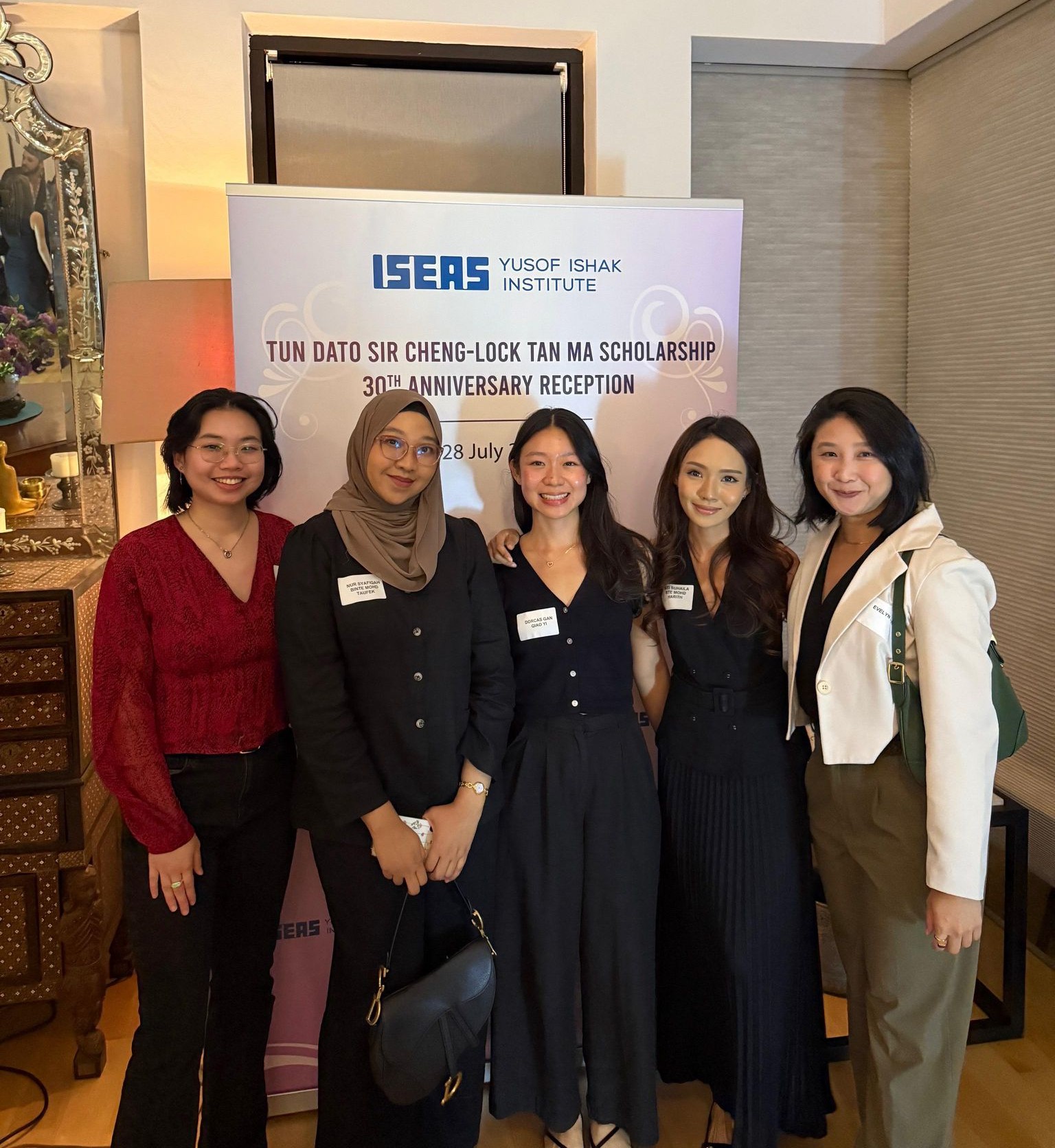
A year and a half into her role, Suhaila says the scholarship has opened more doors than she had imagined – potentially leading to careers in both academia and diplomacy.
“I really enjoy doing research,” she says. “If given the opportunity, I would definitely want to pursue my PhD. But I am also very interested in pursuing a career with the Ministry of Foreign Affairs because I have been interacting with officials from different countries through my work at ISEAS.”
Her journey – from a self-described homebody who had never lived away from home to someone who now loves solo travelling and has formed lifelong friendships across the globe – has been transformative.
For those considering a research career, her advice is simple: Start exploring.
“Take on internships or assistantships, and see what aspects of research excite you,” advises Suhaila. “Even if you don’t end up pursuing research long-term, the skills you develop – critical thinking, investigative skills, problem-solving, communication – are highly valuable in many careers. So just take the leap.”