The 19-year-old teacher stood before a secondary school classroom of students who had little interest in mathematics. He quickly learnt that raising his voice got him nowhere.
Then a teaching intern, Brian Chew knew he needed a different approach. So, he asked himself a more fundamental question: What do these students enjoy and how can I inspire them to pay attention in class?
He started showing up at their after-school sports activities, chatting with them during breaks and sometimes passing a few balls or shooting hoops. When a student was particularly disruptive or looked downcast, he would pull them aside after class to have a casual chat and better understand what was going on.
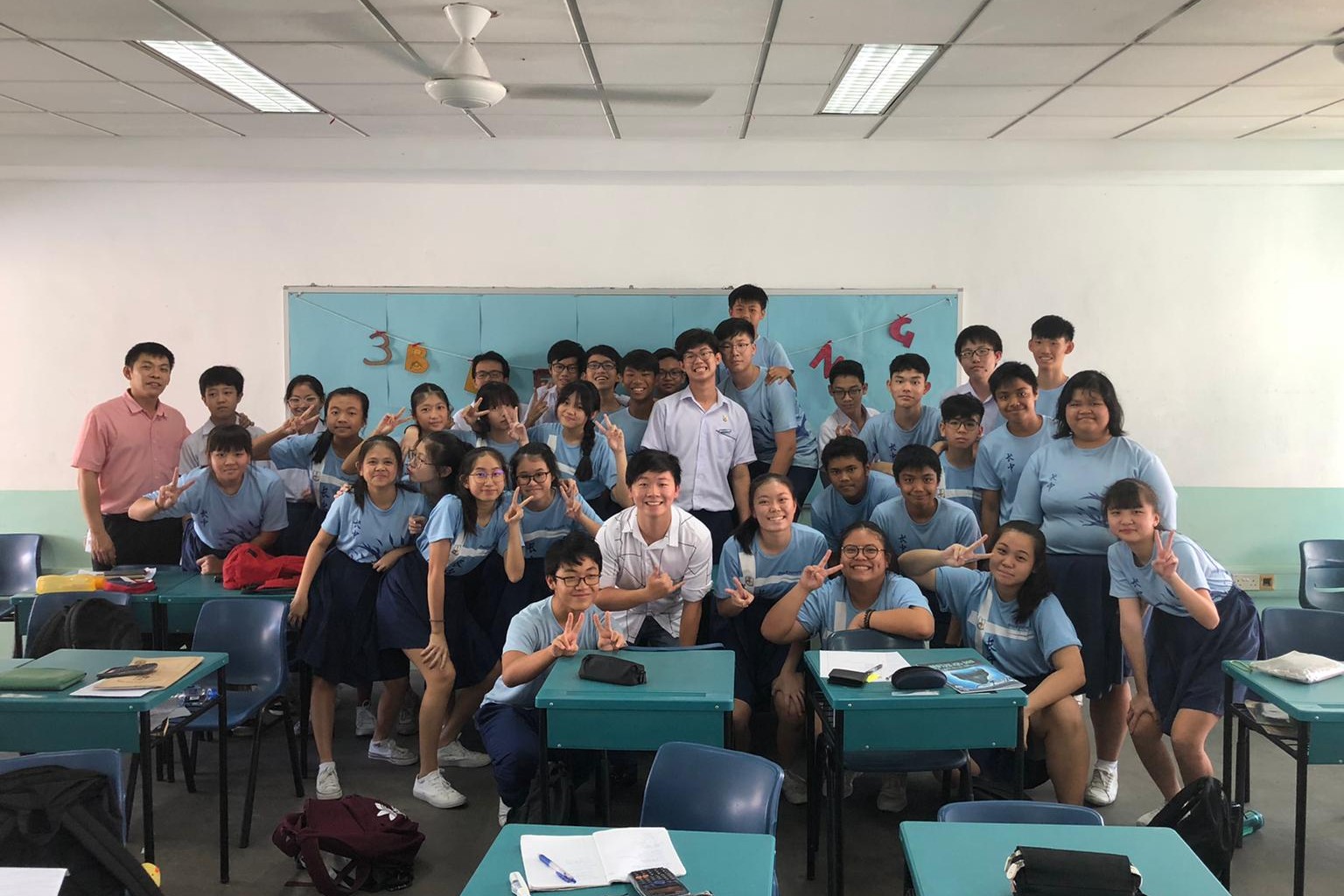
His patience paid off and gradually, he earned their respect. The students noticed their teacher was making an effort to know them as friends, not just students. In response, they started trying harder in class by showing up, paying attention and asking questions.
“I saw students taking a genuine interest in my lessons and understanding what I was teaching them,” shares Brian, now 24. “When I had to leave after my internship, I had students saying they would miss me and my lessons. All of this helped me feel that this was indeed the right choice of career for me.”
As a recipient of the Ministry of Education (MOE) Teaching Scholarship, Brian was able to enrol in the double major undergraduate programme at the National Institute of Education (NIE), conferred by Nanyang Technological University (NTU).
While pursuing a bachelor of science in mathematics and computational thinking and education, Brian is also concurrently in the NTU-NIE Teaching Scholars Programme (TSP).
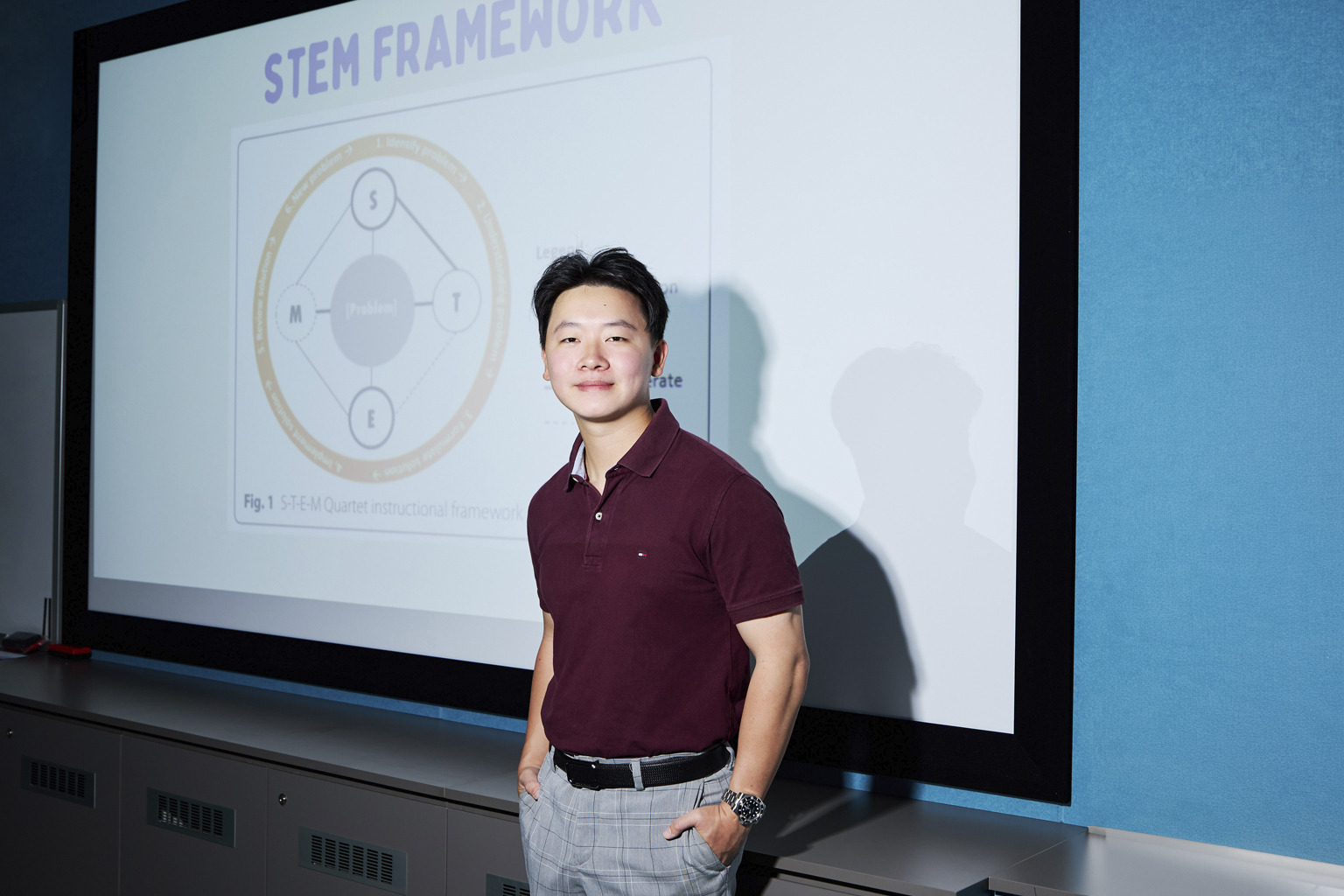
Now in his final year, Brian’s long-term goal is to contribute to revamping Singapore’s STEM (science, technology, engineering and mathematics) education.
Though he may be living and breathing mathematics now, this was not always the case. In lower secondary school, Brian hated the subject and performed poorly in exams. Thanks to the dedication of his teachers in upper secondary school and junior college, who went out of their way to make the lessons interesting, he discovered a love for the subject.
Now that he is a teacher himself, he is rethinking how mathematics can be taught in class. Instead of getting his students to jump straight into complex formulae and concepts, he first captures their attention with relatable context.
“Academics aren’t just books, pens and papers,” Brian says. “Kids have to see that what they learn can be applied to real-world problems. It is a lot more intriguing to them than just solving problems in their workbook.”
Take for instance, the design of soda cans and bottles, he says. Using calculus, it is a more efficient use of space if a cylinder has a height that is equal to its diameter. Yet, why are most cans and bottles not designed this way? “It is because they have to be designed with user-friendliness and practicality in mind,” he explains.
By contextualising subjects like mathematics creatively, Brian hopes to get young people to be more invested in their lessons while strengthening their critical-thinking skills.
The TSP has given Brian and his fellow teachers-in-training opportunities to experiment with new pedagogies. Teaching internships have even taken them overseas as part of the programme’s international pedagogy component, where trainees are seconded to schools in other countries.
Brian had the opportunity to teach English and mathematics at a secondary school in Osaka, Japan, for five weeks in 2024.
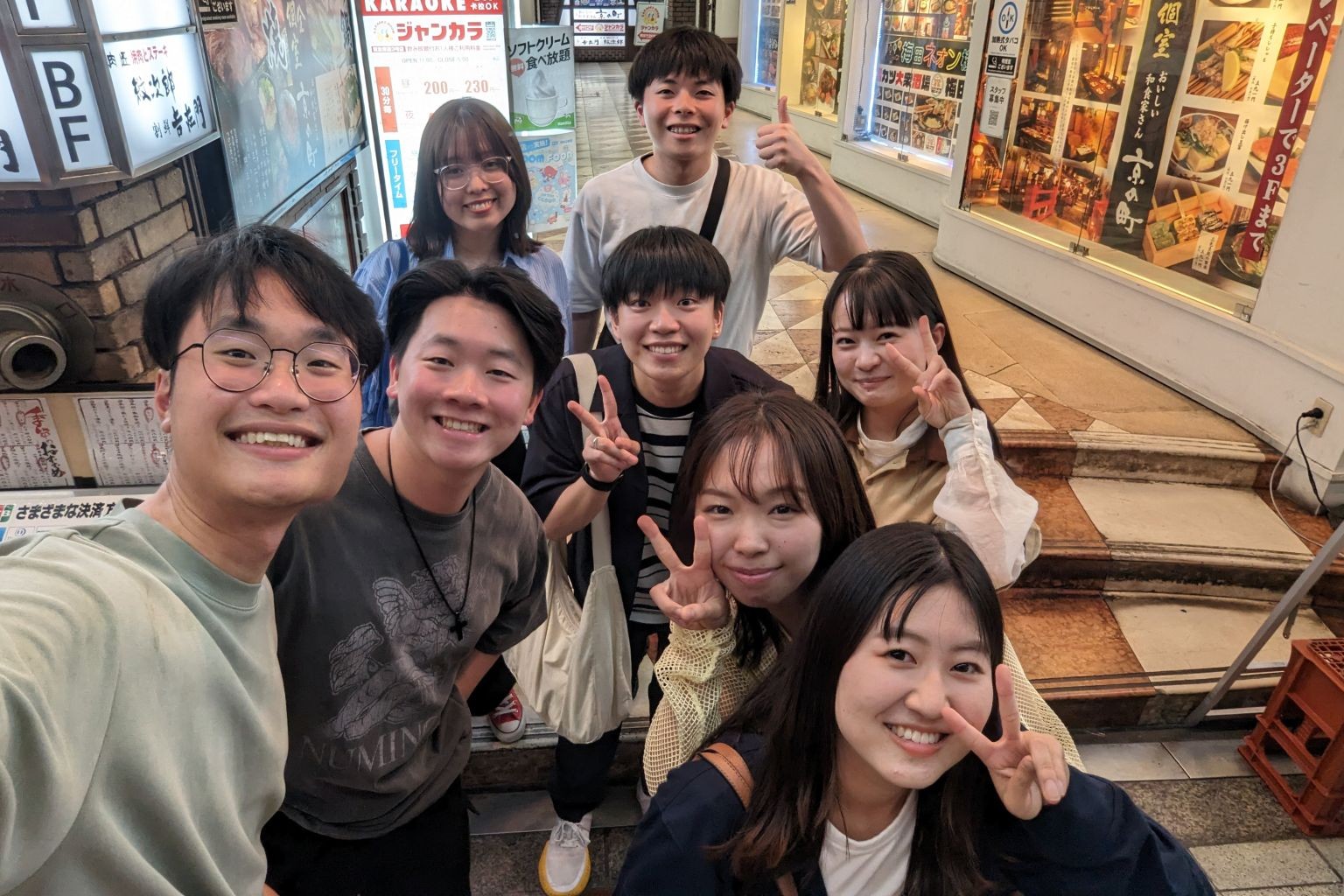
There, he observed that the teachers excelled at weaving real-world contexts into everyday lessons. English classes had students role-play as radio hosts, while mathematics lessons sent them calculating the perimeter and area of their school using scaled maps.
“It was exactly the kind of practical, engaging approach I had been advocating for,” says Brian.
“Kids have to see that what they learn can be applied to real-world problems. It is a lot more intriguing to them than just solving problems in their workbook.”
– Brian Chew, recipient of the MOE Teaching Scholarship and scholar in the NTU-NIE Teaching Scholars Programme
Through all his teaching experiences – from shooting hoops with disengaged students to observing classroom practices in Osaka – Brian has learnt that education is as much about connection as it is about content.
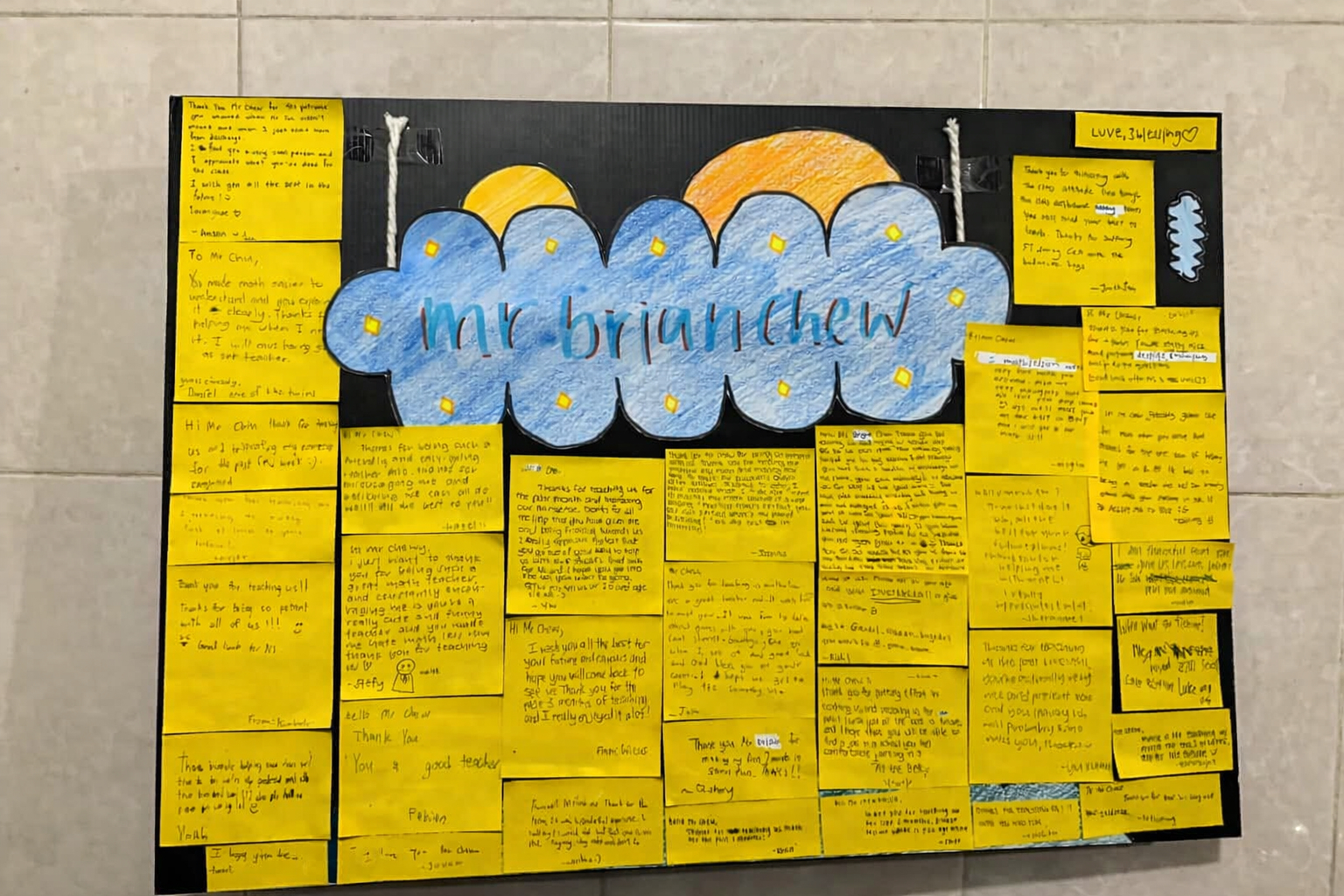
At the end of one of his internships, the students presented him with an unexpected gift: a huge metal grille covered with pictures of him they had secretly taken during his lessons.
“Actually, they shouldn’t have been using their phones in class,” he says with a laugh. “But I didn’t say anything.”
He recognised the photos for what they were – not acts of defiance but young people showing they care. After all, he had done the same for them.